Air India’s 787-8 fleet is undergoing a renewal, including installation of inflight internet service, delivered by Hughes Networks
Air India will install the Hughes Networks inflight internet service on a portion of its widebody fleet. The deal covers the carrier’s A350-1000s as well as 787-8 and 777-300ER aircraft
Our strategic vision is to provide connectivity with home-broadband like bandwidth and latency on Air India’s international and domestic flights so that connecting from our flights feels the same as connecting from home.
– Dr Satya Ramaswamy, Chief Digital & Technology Officer, Air India
The A350s will be delivered from Airbus with the systems installed as part of the HBCplus program. The Boeing fleet will be fitted with the RAVE Aerospace kit. Both solutions leverage the ThinKom ThinAir Ka2517 antenna for multi-orbit support. GEO and MEO satellite capacity is currently online. Hughes also holds an agreement to distribute LEO capacity from the Telesat Lightspeed constellation when it enters aero service, with a light-touch modem upgrade to support the new service.
As with all inflight internet offerings these days, the companies aim to serve not just passengers, but also improve operational efficiency via aircraft monitoring, crew applications, payment validation, and flight-deck services.
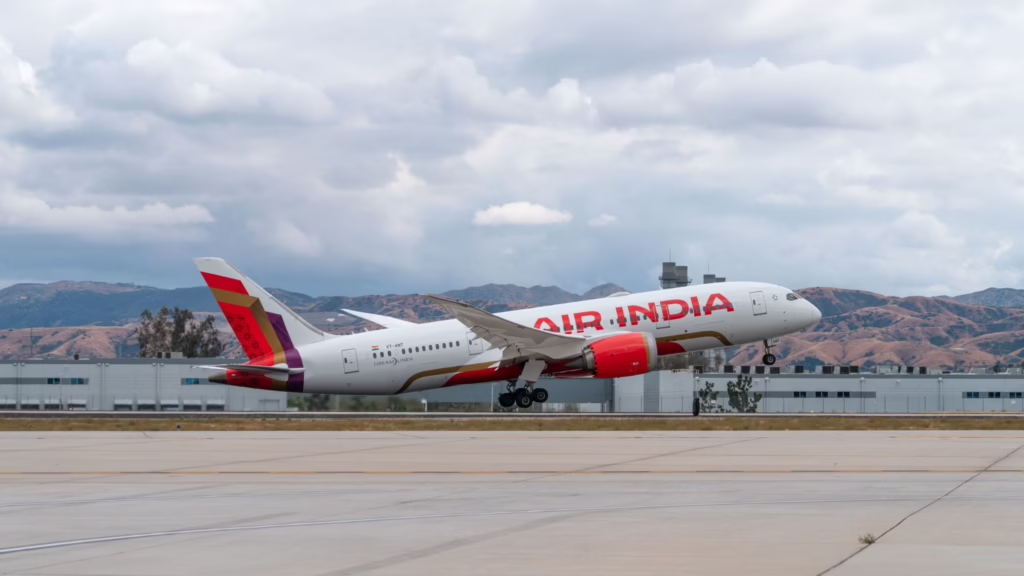
The first Dreamliner retrofit returned to the fleet last week, including the tell-tale radome marking installation of the WiFi system. The carrier expects its 25 787-8 aircraft to be updated by late 2027, with the 777-300ERs to follow.
ESA, ESA!!*
Hughes will also make moves in its aero antenna portfolio. This includes a new “advanced antenna technology system (AATS)” for LEO-based connectivity and confirming a shift in its plans on the Fusion multi-orbit platform.
The AATS platform will bring simultaneous Ku and Ka-band connectivity into a single installation package. Reza Rasoulian, SVP and GM of the Aviation Business Unit at Hughes, is excited about the new terminal and the opportunities it presents for a multi-LEO connectivity solutions. “The reality is LEOs are here and they’re now,” he explained in a conversation at Aircraft Interiors Expo 2026 in Hamburg earlier this month. “Every day there’s new opportunities in the LEO space. So to the extent that an airline does not want to be locked into a single LEO provider, we’re very happy to play. That’s why our strategy is around LEO-LEO. We truly believe in a LEO-LEO world with Ku and Ka simultaneously. No compromise.”
This aligns with general industry trends, including updates to the HBCplus offering from Airbus, also announced during AIX. The airframer is in the process of adopting a more flexible approach to antenna installations, including an option for dual ESAs on a common mount to support multi-constellation services.
Looking for more on the new antenna, and an update on the Hughes/Delta rollout? A PaxEx.Aero Premium Subscription can deliver those details…
*Just imagine the Little Caesars commercials from the 80s, but with two IFC antennae rather than two pizzas and this almost works
Did you enjoy the content? Or learn something useful? Or generally just think this is the type of story you'd like to see more of? Consider supporting the site through a donation (any amount helps). It helps keep me independent and avoiding the credit card schlock.
Seth Miller has over a decade of experience covering the airline industry. With a strong focus on passenger experience, Seth also has deep knowledge of inflight connectivity and loyalty programs. He is widely respected as an unbiased commentator on the aviation industry.
He is frequently consulted on innovations in passenger experience by airlines and technology providers.


Leave a Reply